Friday, October 24, 2014

How to Be a Metal Fabrication Welding Pro

A metal fabrication welder must layout, shape, form, and weld different kinds of metal into the correct structural shapes and sizes. These metal structures are used in heavy machinery and appliances such as ovens, in addition to parts for buildings, pipes, stacks, tanks and many other products.
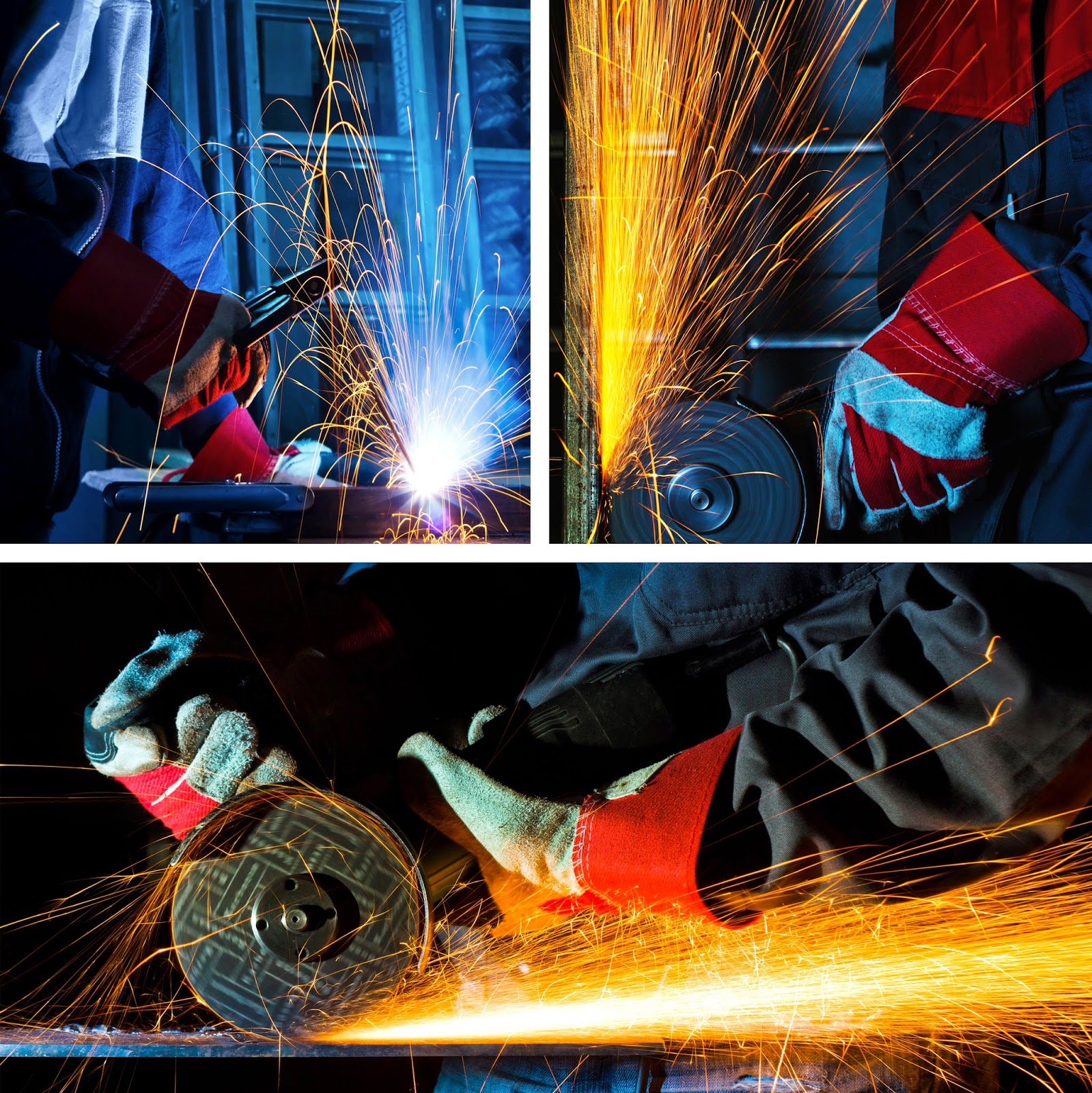
Metal fabrication welder - ensure quality product


Properly equipped and trained metal fabrication welders can create and perfect high quality products over a number of industries and businesses. As with any highly skilled professions, there are rigorous skills that need to be mastered to be successful. In order to become a metal fabrication welder, one must have a few prerequisite skills:
  • Expert fabrication welding professionals can create and assemble structural metal products and prepare blueprints as needed. Trained professionals need to be able to use triangulation, parallel line development, and radial line development to lay out the designs for a product.
  • Professional welders must know the physical properties of the metal they are working with and how to figure the stock needed when calibrating a machine to fabricate parts. Using the fabrication equipment properly is a basic tenet of professional metal fabrication welders.
  • A professional welder must handle shears, press brakes, rollers, lasers, abrasive water jet cutting machines, and automatic welding machines. Using these tools effectively to fabricate products involves a high degree of understanding of basic trade mathematics such as trigonometry and geometry.
  • Welders have to be able to perform intricate work production of sheet metal cabinets, shelving, pipes, ducts, etc. These metal products are difficult to fabricate due to the attention to detail they may require.
  • Welders must also have at least a basic understanding of blueprint reading, welding symbols, sketching, and metallurgy. Skilled professional welders must be able to create and read blueprints in order to understand what product they are fabricating and for what purpose.

Wednesday, October 15, 2014

Metal Fabrication: Assurance of Quality Products

Metal Fabrication involves bending, cutting, and assembling metal structures from various parts and pieces. The actual process of cutting the metal happens through the act of shearing or sawing. It can also be accomplished through laser cutting or punching.

Friday, October 10, 2014

Laser Cutting System: Adding Value to Metal Fabrication

Laser cutting has risen to become one of the most popular technological solutions offered by metal fabrication firms. Through its performance and reliability, laser cutting has become a valuable tool in regards to production. Laser cutting is also regarded as a time saving and cost effective method. This increasingly popular method known as laser cutting provides many benefits to customers.

Tuesday, September 30, 2014

Value Engineering: An Approach to Boost Efficiency


Running a business is incredibly tough work, and getting the most out of yourself and your employees is one of the hardest parts. But what if there was a way you could boost efficiency with just a few relatively simple changes in the way you deal with employees? What if these changes were also sure to guarantee you a higher return on investment when it comes to dealing with employees?


Wednesday, September 24, 2014

How Proper Management Benefits a Metal Fabrication Company

A metal fabrication company is hardly an exception to the laws of economics and company infrastructure. Just like any other business, a metal fabrication company will benefit from proper management. Let’s have a look at some examples:

Wednesday, September 17, 2014

7 Ways to Avoid Hazards of Metalworking Fluid Exposure

Metalworking fluid (MWF) is a term that refers to the spectrum of oils and other substances that are used to cool and/or lubricate metal pieces as they are ground, machined, or milled. MWFs decrease friction and head between work pieces and cutting tools, which assists in preventing smoking and burning.

MWFs also improve workpiece quality by continually taking chips, fines, and swarfs or small metal pieces from the tool at hand and the workpiece surface. There are four basic MWF classes: straight oils, soluble or emulsifiable oils, semi-synthetic fluids, and synthetic fluids. Each class may contain additives such as corrosion inhibitors and stabilizers.
How to Avoid Hazards of Metalworking Fluid Exposure

Friday, September 5, 2014

Are Steel Slags the Future of Sustainable Infrastructure?

Steel slag is a mixture of metal oxides and silicate, and is produced as a by-product during manufacture of iron and steel. However, iron and steel slag is non-metallic in nature and does not have hazardous materials.

Future of Sustainable Infrastructure
The construction industry is leaning towards use of slag for its properties and being environmental-friendly. There are different types of slag generated from the steel making process. The most common slags are Electric Arc Furnace (EAF) slag, LF slag and Steel Furnace Slag (SFS). Some of the world’s largest economies, including the USA, Brazil, European Union, China and Australia are using EAF and LD Slag for many applications.