Friday, November 14, 2014

Humans and Machines: A Symbiotic Future

Contemporary pop and art culture has often portrayed the interactions between humans and robots as an inevitable escalation to machines taking over human societies.. However, is this fact or mere fiction?

Relationship between Human and Machine
Today’s robotic industry is making advances and soon, we are likely to see robots that are more personal. Technology is starting to interact with us in a more direct and individual manner.

The future of human and machine interaction is likely to be realized as robotics engineers test the insights of humans. A friendlier technology that is chattier could improve any device, whether it’s Siri or a driverless car. For instance, anyone would be able to interact with a robot without having to know how to program since it can follow how humans interact with each other.


Perhaps the biggest device beneficiaries of having more humanity in devices would be robot assistants that are designed to help the elderly with basic tasks like washing dishes. These robots are already in Japan and a few other countries, but are not always easy to get on with. Most people do not trust robots and it may require some time before human-robot trust grows.

Should a friendlier and chattier technology be realized, perhaps the most surprising feature would be the sense of randomness that the computers or devices would exhibit. Human behavior is unpredictable and a number of studies have shown that people tend to react to robots in unexpected ways. Generally, a majority of people would warm to machines as if they were real people-once they get used to them.

Finally, people tend to prefer robots that are more similar to them in nationality, gender, and age. Therefore, the success of future human-robot interaction will have to put into consideration the interests of the respective individuals that the robots are designed for.

Friday, November 7, 2014

Important Machines and Techniques for DIY Sheet Metal Fabricators

There are many methods of metal fabrication that are used by metal fabricators in the modern day. Steel plants might best exemplify these methods and techniques. However, it’s vital to try and understand what steel metal fabrication means and what it entails in essence. When you get to know what fabrication entails, you’ll be in a position to understand the tools and techniques that are used in the entire process.

Sheet metal fabrication ideally refers to the act of shaping, forming, and joining metals together for purposes of either building or repairing tangible parts. Metal shaping, forming, and joining are all basic processes of metal fabrication. They therefore employ varied techniques in order to achieve the desired results.

What does sheet metal shaping entail?
Metal forming and shaping is only able to change metals in four main ways. You can cut, bend, shrink and even stretch the metal to the desired shape. Below are some of the basic machines and tools that you can use in this process.

Bending metal
Form bending stands out as the simplest way through which you can bend metals. Just as the term implies, you’ll be bending metal over a shape or edge that is under the metal. A hammer will be of absolute necessity when doing this.

When doing metal brakes, you’ll be able to make clean and precise bends in metal. You will need a clamping tool in doing this so that the metal can produce the desired shape or form.

Cutting metal: What does it entail?
Hand shears are basic tools that you can use in cutting metal to the desired shapes and sizes. However, this is a manual process, but it is still effective regardless of the size of metal you are cutting. In fact, if you want to start a sheet metal fabrication business, shears are among the first tools you ought to purchase.

Also referred to as scissors, power shears are also good for you when you are cutting metal. The good thing with such tools is that they allow you to cut metal faster with less manual effort. There is a wide range of sheers that you’ll come across in the market ranging from electric sheers to pneumatic sheers.

Throatless sheers are also commonly used in metal cutting. These sheers are hand operated and normally come in the form of a hinged blade, which swings down and then cuts through metal. The major advantage of throatless sheers is that they do not waste metal when you are cutting. They are therefore useful when making many cuts of steel at the same time.

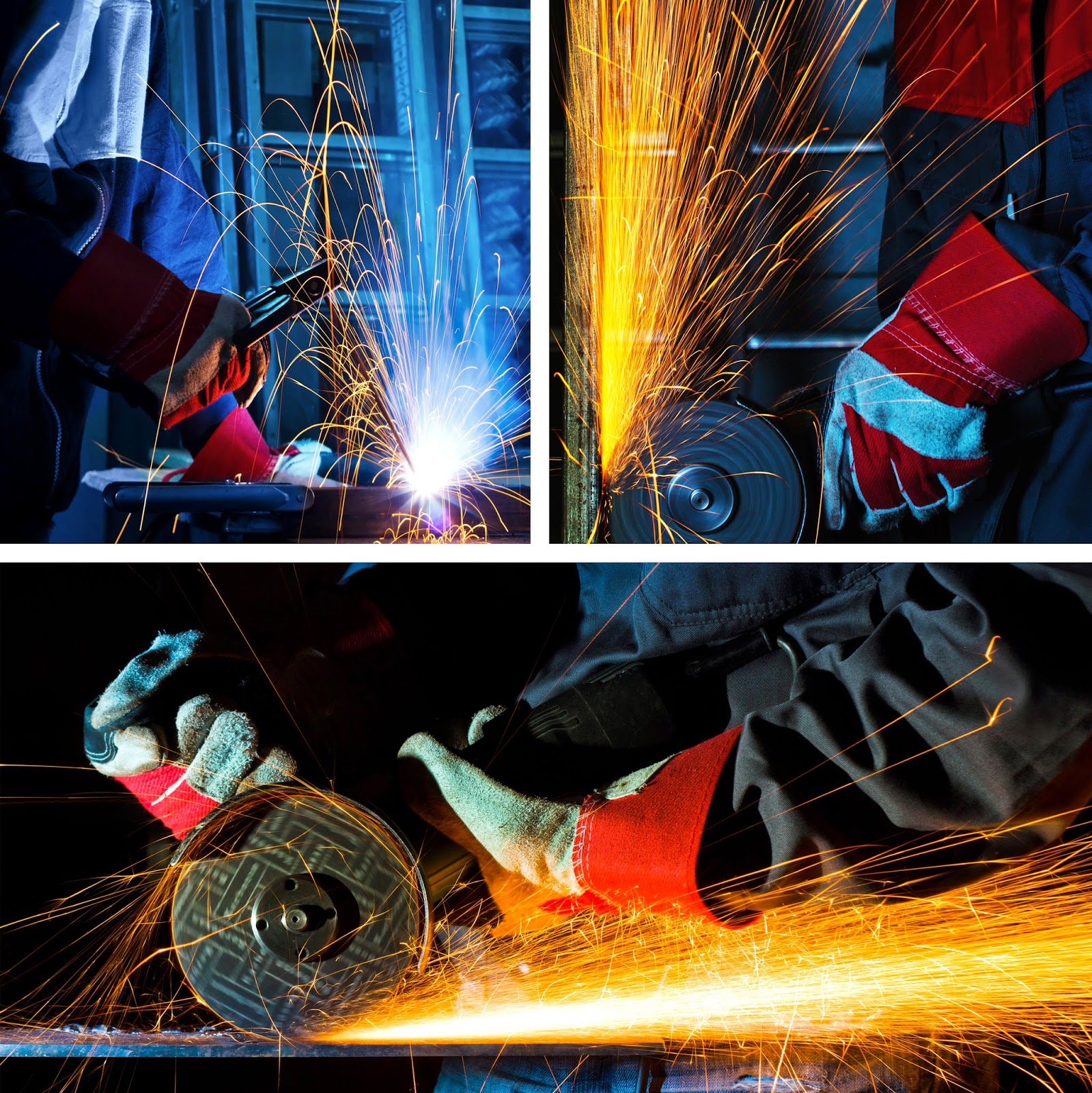
Angle grinders and plasma cutters are also quite effective when cutting metal. Although angle grinders are noisy and messy, they will still get the job done. Again, the plasma cutter is best suited for aggressive and powerful sheet metal cutting processes. If the plasma cutter is adjusted in the right manner, it’s able to cut through metal faster and with a high level of accuracy.

Shrinking metal: What tools and techniques are necessary?
For this, you can use a trucking metal or a shrinker. Trucking metal stands out as one of the earliest methods used in metal shrinking. Ideally, you’ll be bunching metals together and passing them between crevices so that they can form a desired shape. A hammer and a wooden stump will also be useful. A shrinker can be more precise than tucking metal, but it moves metal slowly.

Stretching metal: The must have
When it comes to stretching metal, there are also a few basic tools and techniques which are required. The hammer, dolly, stretcher, and the English wheel are definitely of great importance in such a case. The hammer and dolly stands out as the most basic way of stretching metal.

Metal fusion: The necessities
Lastly, metal fusion is also an important method of sheet metal fabrication. This entails fusing panels together in order to produce large complex parts. Perhaps the most common type of metal fusion today is welding. Welding includes oxy acetylene welding, TIG welding, and MIG welding. The MIG welder is probably the most common and and easiest form of welding in the modern day.

Friday, October 31, 2014

6 Great Halloween Marketing Ideas to Try This Year

Halloween is a time when a business can take advantage – if they sell Halloween supplies, costumes or candy. If you don’t sell Halloween related products, however, you might find that Halloween may be a relatively slow time for your business.

Halloween Marketing Ideas
While convincing people to spend money on your non-Halloween items may be difficult, there are a few things you can do to increase the visibility of your store and drive foot traffic.

Use these six great Halloween marketing ideas to give your business a boost if Halloween is typically dead for you.

  1. Hand out Halloween candy to passers-by. The simple act of getting involved in the Holiday could be enough to get people in your store. For the most part, this strategy works best for retail businesses that have a product to sell on the spot.

  2. Decorate your storefront or business window. By doing this you’ll help to attract customers, even if you don’t sell Halloween supplies. Even some fake spider webs and red paint can be enough.

  3. Throw a party at your store or business and invite customers and potential customers. The conversation will always shift to sales eventually.

  4. Spook-ify your logo. Adding a bat or a drip of blood can give people pause and notice your store.

  5. Offer people discounts and sale items for Halloween. It might seem trite, but the simple act of giving somebody 10% off because it’s Halloween may be enough to get people shopping with you – when they otherwise wouldn’t.

  6. Have a costume contest with a free giveaway. Doing this in your store is usually the most effective, but if you don’t have space, an online contest using Facebook can work too.

Tuesday, October 28, 2014

Everything You Should Know About Custom Metal Fabrication

Metal fabrication is vague term that refers to any process that molds metal into a finished product. Also, many fabrication shops can produce metal products in various ways. However, custom fabrication services are needed for unique products. 
Metal-Fabrication
Types of Services 
Custom fabrication services are helpful in all stages of the product development process. Regardless of whether you require a total production run of items or support on a component assembly project, these three types of custom metal fabrication services will be beneficial to you. 

The first service is the design. The design looks at the conceptualization, and analysis of the part or its characteristics. The second service is the build, or how the product is made. The final service is finishing and assembly. This improves product quality through different treatments. 

In order to ensure the best results, the manufacturing must be done properly. Consider using these custom design services. Conceptualizing is perfect for determining the parts or characteristics required to successfully complete the project. Implementing a computer-aided program is perfect for helping identify potential weaknesses before production. Custom fabricators also help with making unique production tools. Choosing a fabrication method for a project is related to a few factors that shape the product. 

Choosing the Right Shop
Choosing the right shop is a very important decision that can affect manufacturing, quality, and product cost. Experience is important. If the fabricator has an established reputation, they are very likely to give you tremendous service. Make sure the fabricator is able to form the necessary metal required.

Friday, October 24, 2014

How to Be a Metal Fabrication Welding Pro

A metal fabrication welder must layout, shape, form, and weld different kinds of metal into the correct structural shapes and sizes. These metal structures are used in heavy machinery and appliances such as ovens, in addition to parts for buildings, pipes, stacks, tanks and many other products.

Metal fabrication welder - ensure quality product


Properly equipped and trained metal fabrication welders can create and perfect high quality products over a number of industries and businesses. As with any highly skilled professions, there are rigorous skills that need to be mastered to be successful. In order to become a metal fabrication welder, one must have a few prerequisite skills:
  • Expert fabrication welding professionals can create and assemble structural metal products and prepare blueprints as needed. Trained professionals need to be able to use triangulation, parallel line development, and radial line development to lay out the designs for a product.
  • Professional welders must know the physical properties of the metal they are working with and how to figure the stock needed when calibrating a machine to fabricate parts. Using the fabrication equipment properly is a basic tenet of professional metal fabrication welders.
  • A professional welder must handle shears, press brakes, rollers, lasers, abrasive water jet cutting machines, and automatic welding machines. Using these tools effectively to fabricate products involves a high degree of understanding of basic trade mathematics such as trigonometry and geometry.
  • Welders have to be able to perform intricate work production of sheet metal cabinets, shelving, pipes, ducts, etc. These metal products are difficult to fabricate due to the attention to detail they may require.
  • Welders must also have at least a basic understanding of blueprint reading, welding symbols, sketching, and metallurgy. Skilled professional welders must be able to create and read blueprints in order to understand what product they are fabricating and for what purpose.

Wednesday, October 15, 2014

Metal Fabrication: Assurance of Quality Products

Metal Fabrication involves bending, cutting, and assembling metal structures from various parts and pieces. The actual process of cutting the metal happens through the act of shearing or sawing. It can also be accomplished through laser cutting or punching.

Friday, October 10, 2014

Laser Cutting System: Adding Value to Metal Fabrication

Laser cutting has risen to become one of the most popular technological solutions offered by metal fabrication firms. Through its performance and reliability, laser cutting has become a valuable tool in regards to production. Laser cutting is also regarded as a time saving and cost effective method. This increasingly popular method known as laser cutting provides many benefits to customers.